When technology restores humanity
Project Daniel
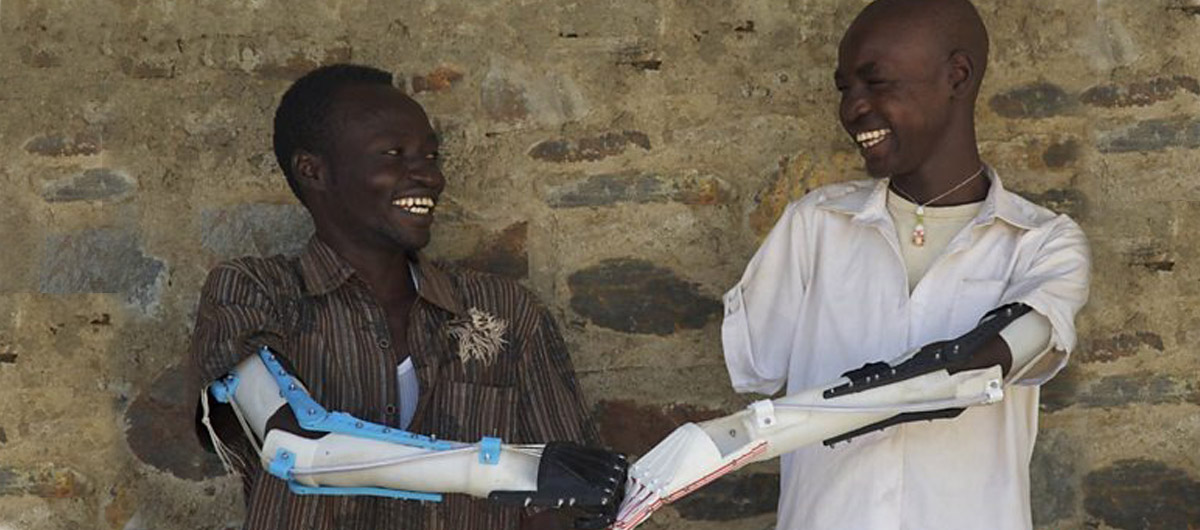
Project Daniel by Not Impossible Labs shows how innovation can transform lives through simple accessible technology. By using 3D printing the team created affordable prosthetic arms for people in Sudan including a young boy named Daniel Omar. The project demonstrates how collaboration practical thinking and purpose driven innovation can restore independence dignity and hope in underserved communities.
Innovation becomes truly powerful when it is guided by compassion. Project Daniel is more than a technological breakthrough, it is a story of resilience, collaboration and human connection. Through the creative use of 3D printing and open innovation, it reimagines what is possible and brings life-changing solutions to communities that need them most.
The story behind Project Daniel
Project Daniel began with a powerful human story that inspired global innovation.
Daniel Omar is a young boy from the Nuba Mountains in Sudan. He lost both of his arms during a bombing and his story eventually reached the team at Not Impossible Labs. Moved by his situation, the team decided to find a technological solution that could restore his independence.
What followed was not just a technical response, but a human one.
The vision of Not Impossible Labs
Not Impossible Labs focuses on solving real world problems through accessible technology. The initiative was led by founder Mick Ebeling, whose philosophy centres on technology for the sake of humanity.
By bringing together engineers, designers and innovators, the team works to solve complex humanitarian challenges in practical ways. Their goal was clear from the start, to create a solution that was both affordable and sustainable.
The role of 3D printing
Traditional prosthetics can cost thousands of dollars and are often inaccessible in remote or conflict affected regions.
With 3D printing
- Prosthetic parts can be produced quickly
- Costs are significantly lower than traditional methods
- The materials are more affordable
- Each prosthetic can be customised to the individual
This made it possible to deliver a solution that was not only effective but also scalable.
Building a lab in a conflict zone
In 2013 the team travelled to Sudan to bring their idea to life. They set up one of the first 3D printing prosthetic labs in a conflict zone using portable and affordable 3D printers.
This approach made it possible to produce prosthetic arms locally rather than relying on expensive imports and complex supply chains. Each prosthetic arm could be printed in just a few hours, allowing more people in the region to receive assistance and regain independence.
Daniel’s first prosthetic arm
The moment Daniel received his prosthetic arm was life changing.
- He was able to perform everyday tasks again
- He could feed himself for the first time in two years
Creating a sustainable solution
Project Daniel was designed to help many people, not just one individual. The team focused on building a solution that could continue to deliver value long after the initial intervention.
Local medical workers were trained to use the 3D printers while community members learned how to assemble prosthetics. This transfer of skills created local knowledge and capability, enabling more amputees in the region to receive prosthetic arms over time.
The impact of purpose driven innovation
Project Daniel shows how technology can make a meaningful difference. It demonstrates that innovation does not always require complex systems to create real impact.
By using accessible tools and practical thinking, it is possible to solve global challenges in ways that are both effective and sustainable. The project also highlights the power of collaboration in bringing technology to underserved communities.
When innovation is guided by purpose, it can restore dignity, independence and hope to people who need it most.